


The digital infrastructure of 2026 represents a paradigm shift where the decoupling of content from presentation has matured from a technical preference into a fundamental business necessity. The global headless Content Management System (CMS) market is currently navigating a period of unprecedented expansion, driven by the convergence of autonomous artificial intelligence, edge-native computing, and a rigorous global demand for data sovereignty. As organizations move beyond the initial "monolithic-to-headless" migration phase, the focus has pivoted toward the orchestration of complex, multi-agent systems and the delivery of near-instantaneous, personalized experiences across an ever-widening array of touchpoints, including spatial computing, IoT, and voice-activated interfaces.
The Macroeconomic State of the Headless CMS Market in 2026
The valuation of the headless CMS sector provides clear evidence of its role as the backbone of modern digital strategy. Industry analysis indicates that the market has transitioned into one of the fastest-growing segments of the broader software-as-a-service (SaaS) ecosystem, with annual growth projections converging between 15% and 25%. For instance, sectors such as government portals are experiencing a projected 25.3% annual increase in adoption as they seek to modernize legacy infrastructures for better public service delivery.
| Research Organization | Projected Market Value | Forecast Year | Primary Growth Driver |
|---|---|---|---|
| Research and Markets | $3.04 Billion | 2030 | Enterprise API-first adoption |
| Market Research Future | $22.28 Billion | 2034 | AI-driven content automation |
| Future Market Insights | $7.11 Billion | 2035 | Composable commerce integration |
| Statista (Contextual) | $1.2 Trillion (B2B Sales) | 2026 | Shift to digital-first procurement |
This trajectory is not merely a result of technological momentum but is rooted in the measurable performance advantages of decoupled architectures. Enterprises in 2026 report that migrating to headless systems facilitates load times that are frequently twice as fast as traditional monolithic platforms, leading to direct improvements in Core Web Vitals and search engine rankings.
Performance Impact: Every one-second improvement in page load time is statistically correlated with a 2% increase in conversion rates, making performance optimization a primary revenue lever.
The Rise of Agentic CMS: From Passive Repositories to Autonomous Orchestrators
The defining trend of 2026 is the emergence of the "Agentic CMS." This represents a fundamental evolution from generative AI—which served as a drafting assistant—to autonomous AI agents that function as active members of the content team. An agentic CMS embeds these autonomous software entities directly into content workflows, allowing them to read, write, and take action on content independently based on high-level goals and context-aware logic.
The Microservices Moment for Artificial Intelligence
The field of AI integration is currently undergoing its "microservices revolution". Rather than relying on a single, monolithic LLM to handle all content tasks, 2026 architecture prioritizes orchestrated teams of specialized agents. Industry reports indicate a 1,445% surge in multi-agent system inquiries between 2024 and 2025, signaling a massive shift in how enterprise systems are designed. These agents operate within "bounded autonomy," where they are given clear operational limits and escalation paths for high-stakes decisions.
The mechanism behind these systems involves a shift from passive automation to proactive orchestration. Agentic systems are most effective when connected to real-time observability across cloud, IT, and financial environments. For example, instead of waiting for a human prompt to update a product description, an autonomous agent can detect a change in a Product Information Management (PIM) system, trigger a translation workflow, optimize the text for SEO, and update the metadata across all regional variants simultaneously.
Multi-Step Workflows and Data Triggers
In 2026, the strategic advantage of an agentic CMS lies in its ability to handle multi-step logic across disparate platforms without human intervention. This is achieved through a structured data layer—often referred to as a "Content Lake"—that allows AI agents to interpret content and workflow states.
| Scenario | Trigger Mechanism | Autonomous Agent Action |
|---|---|---|
| New Product Drop | New SKU detected in PIM | Drafts descriptions, tags DAM assets, prepares 5 regional localizations |
| Inventory Alert | Stock level drops below 10 units | Updates hero banner to "Selling Fast," triggers PLP re-indexing |
| Seasonal Shift | Calendar date = November 1st | Swaps all Fall background assets for Winter assets across the mobile app |
| Compliance Audit | Periodic scan or content update | Analyzes content for inclusive language and legal disclaimers; suggests changes |
This transition is supported by protocols like the Model Context Protocol (MCP), which provides agents with structured, secure access to the content model without requiring manual retraining. The result is a "digital workforce" that handles marketing asset workflows 24/7, enabling human teams to focus on high-level strategy and creative direction.
Edge Computing and High-Performance Delivery Standards
The infrastructure of 2026 has definitively moved to the network edge. Performance is no longer viewed as a "nice-to-have" but as a foundational requirement for mobile-first, AI-optimized search environments. The dominance of the Jamstack philosophy has evolved into a performance-first default, emphasizing static generation, edge delivery, and API-first design.
Next-Gen Rendering and Global Speed Optimization
The synergy between modern headless CMS platforms and deployment environments allows for sophisticated rendering strategies that optimize both speed and cost. Developers in 2026 utilize a hybrid approach, choosing between Static Site Generation (SSG), Server-Side Rendering (SSR), and Incremental Static Regeneration (ISR) on a per-page basis to ensure that high-traffic pages load with near-zero latency.
Edge performance directly impacts the bottom line. With the current ubiquity of high-speed 5G and nascent 6G networks, user expectations for load times have dropped below the one-second threshold. To meet these demands, headless CMS implementations focus on achieving Lighthouse scores of 95+ by optimizing Core Web Vitals and leveraging edge caching. This is critical for SEO, as search algorithms in 2026 prioritize sites that demonstrate superior technical performance and structured data accessibility.
WebAssembly and Demanding Web Applications
A secondary trend within the performance space is the widespread adoption of WebAssembly (Wasm). In 2026, Wasm allows developers to run high-performance code (C++, Rust, C#) within the browser at near-native speeds. This has opened the door for complex, compute-heavy applications to be managed via headless CMS. Use cases such as 3D modeling, CAD tools, and real-time scientific data visualization are now being served through the same API-first architectures that power traditional marketing sites. This capability ensures that as web applications become more demanding, the underlying content management layer can scale without becoming a performance bottleneck.
AI-Native Visual Editors: Bridging the Marketer-Developer Divide
One of the historical friction points of headless CMS—the lack of visual editing for non-technical users—has been resolved in 2026 through the development of AI-native visual editors. These tools restore the context that traditional headless systems often stripped away, allowing marketers to plan, preview, and schedule content visually without sacrificing the structured data integrity that developers require.
The Rebirth of the WYSIWYG in a Decoupled World
Modern platforms have pioneered visual workspaces that provide real-time previews across different devices, languages, and personalization states. These environments allow marketers to work with "component blocks" that are reusable across various channels—a practice that 80% of companies highlight as a key driver of improved content reuse.
| CMS Platform | Visual Editing Approach | Primary 2026 Innovation |
|---|---|---|
| Storyblok | Component-based visual editor | Visual block management for non-technical users |
| Sanity | Sanity Studio (Open-source React app) | Real-time collaborative editing and "Schema as Code" |
| Contentful | Contentful Studio and AI Assist | Built-in personalization and experimentation at scale |
| Strapi | Plugin-driven visual customization | Open-source flexibility with self-hosting options |
In 2026, the divide between development and marketing teams is dissolving. Marketers gain the freedom to manage layouts and content structures independently, while developers retain full control over the frontend framework (React, Vue, Next.js, or Svelte) and the underlying API orchestration. This collaborative environment is further enhanced by AI-driven chat interfaces that replace static contact forms and handle support, onboarding, and lead qualification directly within the CMS workflow.
Security, Zero-Trust, and Data Sovereignty in 2026
The security landscape in 2026 is defined by a move toward "Zero-Trust Data Sovereignty," where organizations must maintain absolute control over their data regardless of whether it is stored in the cloud, on-premises, or at the edge. This evolution is driven by the increasing complexity of cloud environments and the threat posed by quantum computing, which endangers current asymmetric cryptography standards.
Client-Side Encryption (CSE) and Key Ownership
A critical trend for 2026 is the implementation of Client-Side Encryption (CSE), which ensures that data is encrypted before it ever reaches the cloud provider. This technically eliminates third-party access—including access by cloud administrators—to sensitive plaintext data. True sovereignty in 2026 requires that organizations maintain full ownership of their encryption keys through integration with Hardware Security Modules (HSM) or Key Management Services (KMS).
| Security Challenge 2026 | Technical Response | Regulatory Driver |
|---|---|---|
| Administrator/Cloud Risk | Zero-trust data level (plaintext absence) | GDPR, DORA, NIS2 |
| "Harvest Now, Decrypt Later" | Post-Quantum Cryptography (PQC) | EU PQC Roadmap (2026 deadline) |
| Deepfake/Identity Era | Multi-factor biometric authentication | Fraud and executive impersonation defense |
| AI-Enabled Threats | Machine-learning threat correlation | Real-time response automation |
Regulations such as the NIS2 directive in Europe and various AI statutes in the US have made cybersecurity a boardroom priority. Organizations are moving away from exclusive reliance on foreign public clouds toward local, private network deployments to ensure compliance with data residency laws and to reduce the single point of failure inherent in centralized platforms.
The Shift to Quantum-Ready Security
The "clock is ticking" for organizations to adopt post-quantum algorithms. With forecasts suggesting that current encryption could be cracked by quantum computers in less than a decade, 2026 marks a turning point where enterprises must begin creating cryptographic inventories and investing in "crypto-agile" hardware. These systems allow for the updating of PQC algorithms without requiring a complete infrastructure replacement, ensuring long-term data resilience.
Composable Commerce and the MACH Architecture Standard
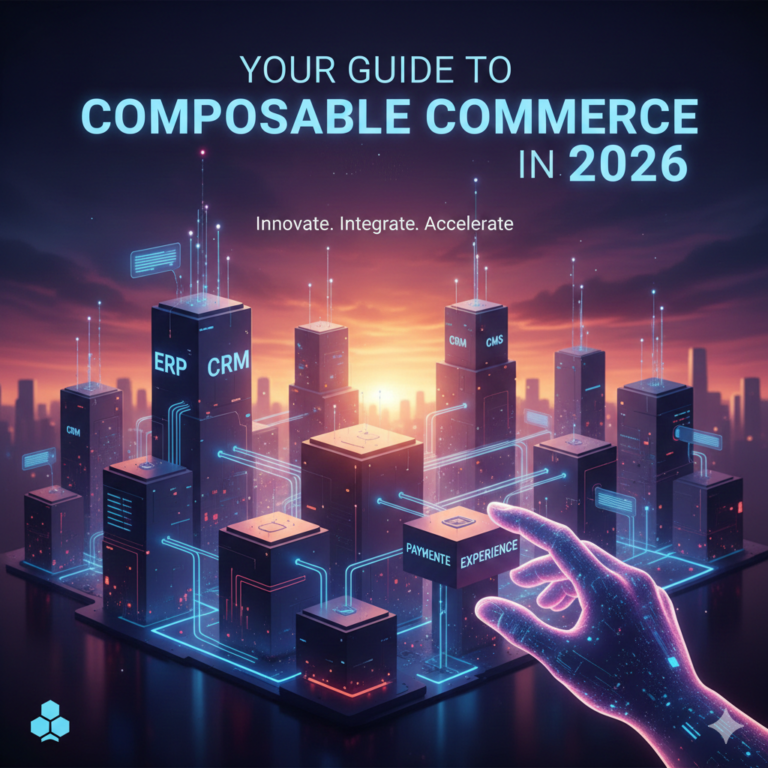
The transition to headless systems has been most aggressive in the e-commerce sector, where the "Composable Commerce" model is now the default standard for 92% of US brands. By 2026, businesses have realized that monolithic platforms cannot match the agility required to respond to rapid market changes. Instead, they assemble best-of-breed components—such as commercetools for the engine, Algolia for search, and a headless CMS for storytelling—into a unified digital experience platform (DXP).
Unified Data Layers and Omnichannel Consistency
The primary advantage of this composable approach in 2026 is the creation of a unified data layer that eliminates channel silos. Content created once can be distributed across unlimited channels—web, mobile, social media, in-store kiosks, and voice assistants—ensuring 100% brand consistency.
Content Agility: 82% of businesses report that headless systems simplify the delivery process.
Reduced Costs: Centralizing content management eliminates the need for multiple disparate systems.
Future-Proofing: New channels (e.g., wearables or smart mirrors) can be integrated via API without infrastructure overhauls.
AI-driven personalization has become the "intelligence layer" of this architecture, turning static storefronts into dynamic experiences that adapt in real-time based on behavior-based prediction. AI-powered personalization is expected to drive 40% more revenue for early adopters by the end of 2026.
Real-Time Search and Discovery
Millisecond response times in search are no longer optional. Real-time search engines integrated with headless CMS platforms provide intent-driven results that have been shown to increase conversions by up to 24%. These systems utilize machine learning to understand user intent, providing personalized recommendations and smart product bundling that static systems simply cannot replicate.
Omnichannel Evolution: IoT, Spatial Computing, and PWAs
As we move through 2026, the "screens" we interact with are becoming increasingly diverse. Headless CMS architecture is the only viable method for delivering consistent content to this fragmented landscape.
Immersive Experiences and Spatial Computing
Immersive technologies such as AR, VR, and spatial computing have moved beyond gaming into retail, healthcare, and industrial training. In 2026, developers use headless CMS APIs to feed 3D product visualizations and virtual classrooms. These interactions are powered by next-gen 5G/6G connectivity and edge computing to ensure the low latency required for a hyper-realistic feel. Gesture-based controls and AI-assisted interactions are now common features in these spatial environments, requiring the CMS to deliver structured data that can be interpreted by diverse UI engines.
Progressive Web Apps (PWAs) as the Default Mobile Strategy
PWAs have matured into the default option for mobile-first websites in 2026. Many businesses now choose PWAs over native apps because they offer offline access, background sync, and push notifications without the friction of app stores or platform fees. Search engines continue to favor PWA-based experiences due to their superior speed and usability, strengthening their role in customer acquisition strategies.
Voice Search Optimization (VSO)
The rise of AI-powered conversational interfaces has made Voice Search Optimization (VSO) a critical content strategy in 2026. Content must now be structured to answer phrases spoken in daily conversations, utilizing long-tail, question-based keywords. Experts rely on local schema markup and metadata at the location level to assist with local voice searches, which are increasingly hands-free and accessibility-focused.
Search Evolution: AI-Optimized SEO and the Core Web Vitals Era
In 2026, SEO is no longer just about keywords; it is about performance, structured data, and AI readiness. Organizations specializing in headless CMS migrations focus on "zero SEO regression," ensuring that the transition from legacy systems does not result in traffic loss.
Performance as SEO: Core Web Vitals are the primary metric for search rankings. Decoupled frontends built with Next.js allow for the optimization of these vitals to an extent impossible with monolithic systems.
Structured Data: Headless systems expose content as structured data, making it easier for AI-driven search engines to index and understand the context of the information.
AI-Generated Content & SEO: Modern CMS platforms use AI to automatically generate meta descriptions, titles, and tags, and to identify content gaps by performing real-time competitor analysis.
The goal of content strategy in 2026 is to create "future-proof" content foundations that can be consumed equally well by human readers and AI agents.
Waredock: Applying Headless Principles to E-Commerce Fulfillment
The same architectural principles that have revolutionized content management—decoupling, API-first orchestration, and AI-driven intelligence—are now being applied to the physical world of global logistics. Waredock stands as the leading example of this convergence, operating as an AI-first logistics operating system designed for modern e-commerce brands.
A Distributed 3PL Network: The Physical Content Delivery Network
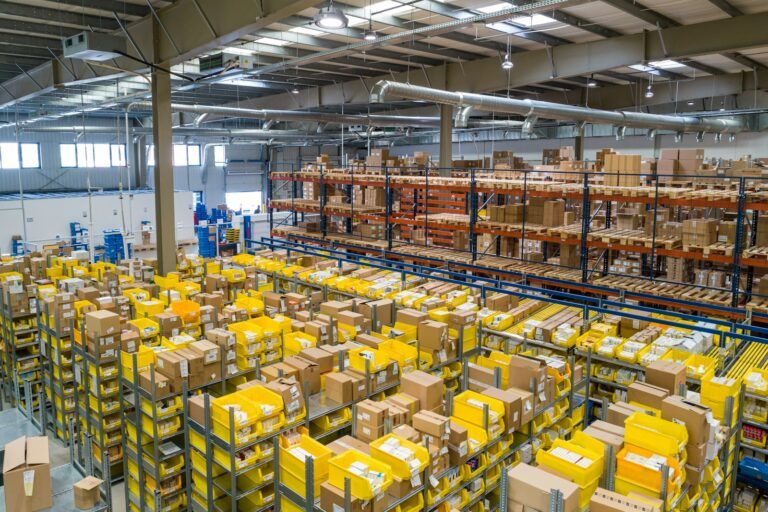
Just as a headless CMS uses a CDN to cache content at the edge for faster digital delivery, Waredock uses a distributed network of over 50 strategically located fulfillment centers to position inventory closer to customer hubs. This "multi-warehousing" model allows brands to fulfill orders from the center closest to the customer, drastically reducing delivery times and cutting last-mile logistics costs.
| Waredock Service Feature | Logistics Outcome | Architectural Parallel |
|---|---|---|
| Cloud-Based WMS | Single source of truth for all inventory | API-first Content Lake |
| Smart Routing | Orders directed to optimal warehouse/carrier | Edge personalization and delivery |
| No-Code Setup | Seamless integration with Shopify/Amazon | Composable architecture plugins |
| SLA Guardian | Predictive monitoring of delivery promises | Automated governance and audits |
Revolutionizing E-Commerce Operations
Waredock manages the "messy middle" of the supply chain—the complex orchestration between online sales channels and physical inventory management. The platform provides scalable, sustainable fulfillment solutions with total visibility into every aspect of operations—from real-time inventory levels to order status.
Waredock's Warehouse Management System (WMS) exemplifies the shift toward high-velocity e-commerce, offering features like location-specific inventory visibility, intelligent cycle counts, and flexible picking options (batch, auto-cluster, or single-order) to maximize efficiency and streamline your e-commerce operations automation.
Global E-Commerce Fulfillment and Sustainable Practices
In an era where modern shoppers prioritize environmentally friendly fulfillment, Waredock's multi-warehousing model offers a unique selling point by creating a lower carbon footprint through localized shipping. The platform serves brands across borders with a distributed 3PL network that supports cross-border logistics management, customs, and duty-paid routing in international markets including the EU, AU, UK, and US.
By treating warehouse space as a flexible, on-demand resource rather than a long-term fixed contract, Waredock provides the same agility to physical fulfillment that headless CMS platforms provide to digital content. This allows brands to scale their e-commerce operations effortlessly, adapting to seasonal demand shifts and global market changes with the intelligence and speed required in 2026.
Market Context: As e-commerce continues its projected growth toward a $7.5 trillion global market by 2026, the integration of technological solutions becomes a mandatory requirement for brands seeking to maintain a competitive edge in a hyper-fast, AI-driven world. The convergence of digital content management and physical fulfillment represents the final stage of the digital transformation journey, where the entire customer experience—from the first click to the final delivery—is managed through a single, intelligent, and decoupled ecosystem.