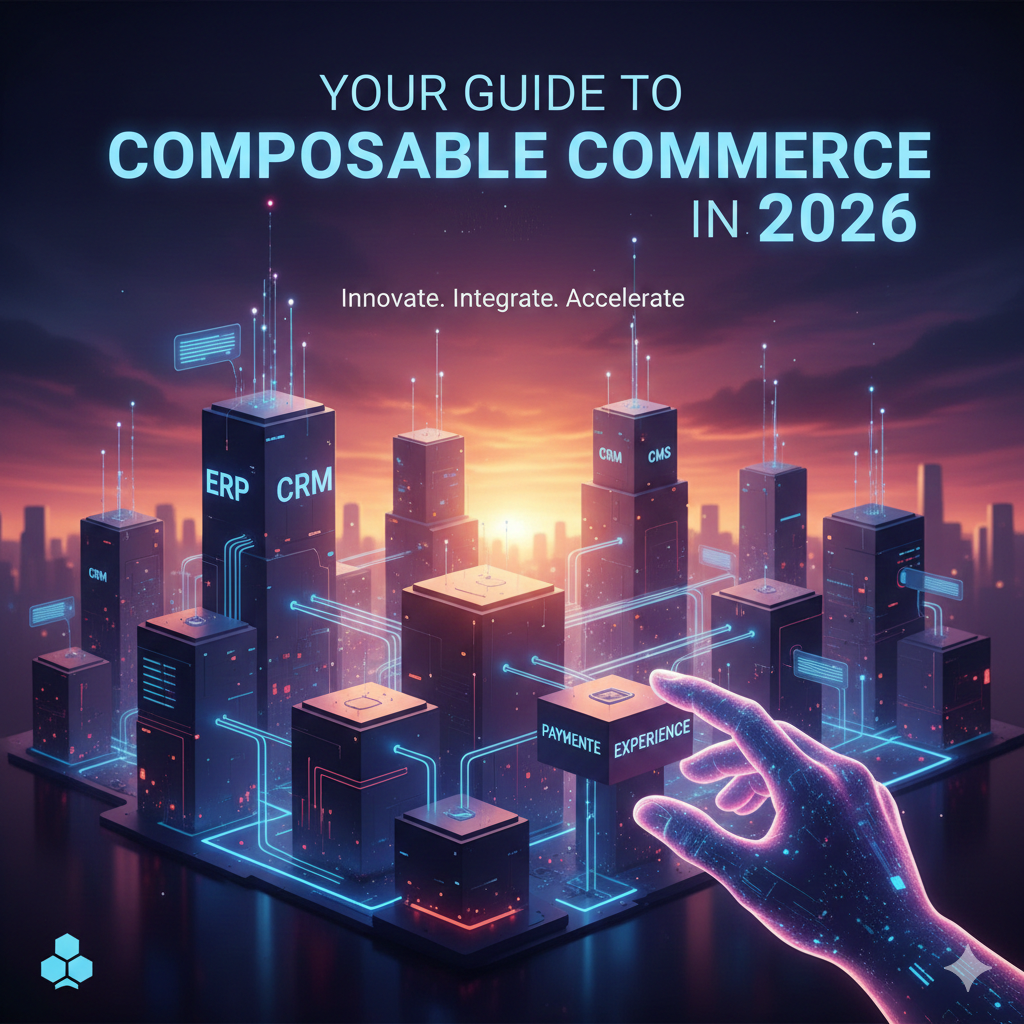
In the fast-moving digital landscape of 2026, the term composable commerce has transitioned from a buzzword to a critical business strategy. As brands move away from rigid, "one-size-fits-all" legacy systems, understanding the meaning and application of this modular approach is essential for staying competitive.
What is the Meaning of Composable Commerce?
At its core, composable commerce is a modern approach to building e-commerce platforms by assembling "best-of-breed" components into a custom-fit system. Instead of a single, monolithic software suite that handles everything, a composable system uses independent, API-connected modules to address specific business needs.
A common diagram or analogy used to explain this is LEGO® bricks: each piece is a self-contained service (like checkout or search), but the potential combinations for building a unique "set" are virtually endless.
Headless vs. Composable vs. Monolithic: A Comparison
To understand where we are in 2026, we must look at the evolution of commerce architecture:
| Feature | Monolithic (Legacy) | Headless Commerce | Composable Commerce |
|---|---|---|---|
| Structure | All-in-one, tightly coupled. | Decoupled front-end and back-end. | Modular, best-of-breed components. |
| Flexibility | Rigid; difficult to update or change. | High front-end freedom; back-end remains a monolith. | Unparalleled flexibility across the entire stack. |
| Integration | Difficult; relies on the platform's roadmap. | Via APIs between front and back-end. | Seamless integration via APIs for every microservice. |
| Speed | Slow to market with new features. | Faster front-end updates. | Rapid innovation and independent scaling. |
The MACH Architecture: The Engine Behind Composable
The technical foundation of composable commerce is often referred to as MACH architecture. This acronym stands for:
- Microservices: Individual, independent components that perform specific tasks.
- API-first: Functionalities are connected through Application Programming Interfaces, allowing them to "talk" to each other seamlessly.
- Cloud-native: Systems are built to leverage the full benefits of distributed cloud computing for scalability.
- Headless: The presentation layer (what the customer sees) is entirely separate from the back-end logic.
Most Intriguing Findings: The Shift to "Agentic Commerce"
The most significant trend identified for 2026 is the emergence of Agentic Commerce. This represents the next stage of evolution after headless and composable models.
- Intelligence Over Integration: While composable systems solve today's integration challenges, they also provide the groundwork for AI agents to support operations and decision-making in real time.
- Real-Time Adaptability: In an agentic future, commerce systems won't just be flexible; they will be intelligent enough to coordinate human input and automated AI actions simultaneously.
- Efficiency Gains: Adopters of this "agentic" mindset will use AI-driven tools for dynamic pricing, intelligent order routing, and hyper-personalization to gain a massive competitive edge.
Why Is Composable Critical for Growth Now?
As of 2026, brands are facing a "post-cookie" world where third-party data is gone. Composable commerce allows for:
- Vendor Independence: You are no longer locked into one provider; you can swap out parts of your stack as better technology emerges.
- Cost Control: You only pay for the features and services you actually use, reducing operational overhead.
- Omnichannel Mastery: Businesses can easily extend their commerce capabilities into new channels like voice search, AR try-ons, and IoT devices.
Key Takeaway: Gartner predicts that organizations adopting a composable approach will outpace their competition by 80% in the speed of new feature implementation.
Frequently Asked Questions (FAQ)
Is composable commerce the same as headless?
Not exactly. Headless is the first step toward composable commerce. Headless separates the front and back end, while composable breaks the entire back end into individual, modular microservices.
What are Packaged Business Components (PBCs)?
PBCs are the individual "building blocks" of a composable system—prebuilt sets of business functionalities like a shopping cart, payment gateway, or search engine that can be easily integrated into your stack.
What is the "tradeoff" for using composable?
While highly flexible, composable commerce requires thoughtful orchestration. Managing multiple vendors and ensuring a cohesive user interface requires a higher level of digital maturity and design effort.