

Fulfilment costs are what you pay to have an order received, stored, picked, packed, shipped and, if needed, returned. For most eCommerce brands in Europe, outsourced fulfilment costs about €2.80–5.50 per order before postage, and about €5–10 per order including national shipping. This guide breaks down each fee with 2026 market prices, shows what a brand pays at 50, 200, 500 and 2,000 orders a month, and explains how to compare fulfilment quotes and lower your cost per order.
Quick answer: A 3PL usually charges for receiving (€4–15 per pallet), storage (€8–25 per pallet per month), pick and pack (€1.50–4.00 per order plus €0.20–0.50 per extra item), packaging (€0.20–0.90) and shipping. Your cost per order falls as volume grows: in our example it drops from about €9.40 at 50 orders a month to about €7.10 at 2,000 orders a month, including shipping.
Indicative 2026 market ranges for Germany, based on published price guides from German fulfilment providers and comparison sites (see sources).
Jump to: What fulfilment costs include · 2026 prices · How 3PLs charge · Examples by order volume · What drives your cost · How to reduce costs · Comparing quotes · FAQ
What fulfilment costs include
Fulfilment covers everything that happens to an online order inside and from the warehouse: receiving your stock, storing it, picking and packing each order, handing it to a carrier and processing returns. Fulfilment costs are therefore usually counted per order, which makes them easy to compare with your average order value and margin.
They are one part of your wider logistics costs, which also include inbound freight from suppliers, customs, inventory carrying costs and administration. This article focuses on the fees an eCommerce brand pays a fulfilment provider (3PL).
Fulfilment prices in 2026: the fees explained
| Fee | What it covers | Indicative range, 2026 |
|---|---|---|
| Onboarding and setup | Account setup, shop and marketplace integration, product data | Often free for standard integrations; one-off fee for custom work |
| Receiving | Unloading, counting, labelling and putting stock away | €4–15 per pallet, €3–8 per carton |
| Storage | Pallet, shelf or bin space per month | €8–25 per pallet location; €22–38 in premium urban locations |
| Pick and pack | Picking the items and packing the order | €1.50–4.00 per order, plus €0.20–0.50 per extra item |
| Packaging | Boxes, mailers, void fill, tape | €0.20–0.90 per order |
| Shipping | Parcel delivery to the customer | Negotiated business rates; DHL list prices for private senders are €5.49 (up to 2 kg) and €6.99 (up to 5 kg) |
| Returns | Receiving, checking and restocking returns | €2–5 per return, plus return shipping |
| Value-added services | Kitting, inserts, gift wrapping, labelling | Per unit or per hour |
Most of the cost of an eCommerce order is shipping, so carrier rates and parcel size matter more than a few cents on pick and pack. Rates are still rising: DHL raised its parcel prices for business customers on 1 January 2026.
How fulfilment providers charge
- Pay per activity: the most common model in Europe. You pay separately for each receipt, pallet stored, order picked and parcel shipped. Transparent, but you need your order profile to estimate the total.
- Bundled price per order: one price covering pick, pack and sometimes packaging and shipping for a standard order. Easy to budget, but check what counts as “standard”.
- Monthly minimums or account fees: some providers charge a minimum monthly amount or a fixed account fee. If your activity falls below it, you pay the difference.
- Storage billing method: per pallet, per shelf or bin, or per cubic metre, charged weekly or monthly. Ask whether you pay for actual space used or a fixed reserved area.
Fulfilment cost examples at 50, 200, 500 and 2,000 orders a month
These examples use assumptions within the 2026 market ranges: parcels under 2 kg shipped within Germany, 1.5 items per order on average, a 10% return rate and stored stock growing with volume. Shipping and pick and pack rates fall as volume grows, as they usually do in real quotes.
| Monthly cost | 50 orders | 200 orders | 500 orders | 2,000 orders |
|---|---|---|---|---|
| Pick and pack (first item) | €125 (€2.50) | €440 (€2.20) | €1,000 (€2.00) | €3,600 (€1.80) |
| Extra items (€0.35 each) | €9 | €35 | €88 | €350 |
| Packaging (€0.40) | €20 | €80 | €200 | €800 |
| Shipping (per parcel) | €260 (€5.20) | €960 (€4.80) | €2,250 (€4.50) | €8,200 (€4.10) |
| Storage (€15 per pallet) | €30 (2 pallets) | €75 (5) | €150 (10) | €450 (30) |
| Receiving (€8 per pallet) | €8 (1 pallet) | €24 (3) | €48 (6) | €160 (20) |
| Returns (10%, €3.50 each) | €18 | €70 | €175 | €700 |
| Total per month | €469 | €1,684 | €3,911 | €14,260 |
| Cost per order | €9.38 | €8.42 | €7.82 | €7.13 |
Source: Waredock example using assumptions within 2026 market ranges for Germany.
Small brands pay more per order mainly because of higher shipping rates and pick and pack prices at low volume. If a provider also charges a monthly minimum, check it against the total for your expected volume: at 50 orders a month, a minimum of a few hundred euros can add several euros per order.
What drives your fulfilment cost
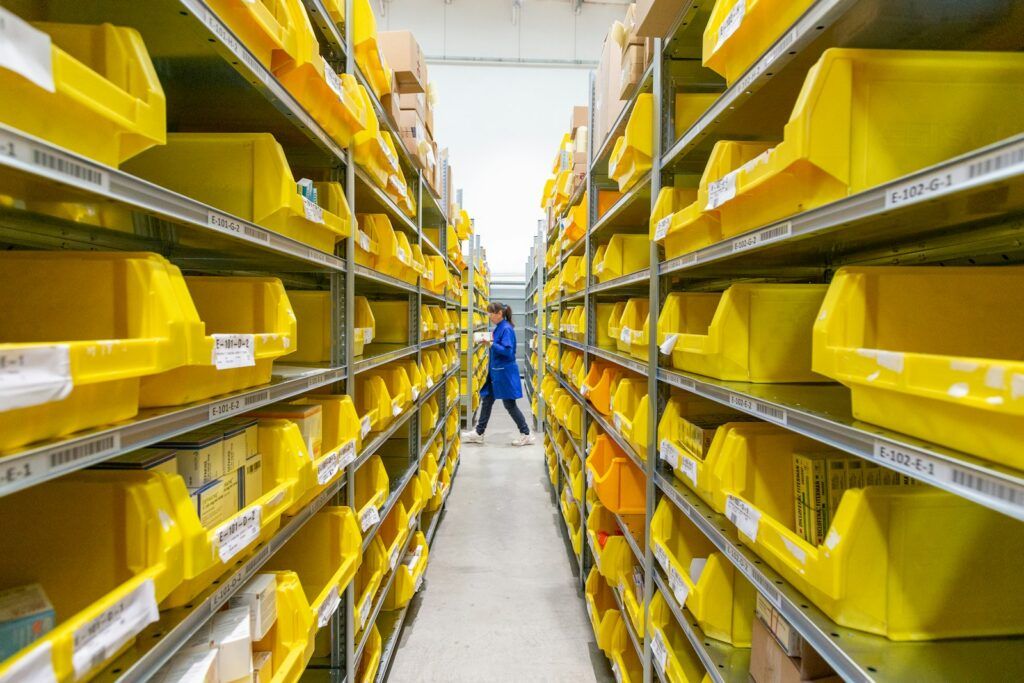
- Order profile: items and order lines per order. Multi-item orders cost more to pick but spread shipping and packaging over more value.
- Product size and weight: bulky and heavy products need more space, bigger boxes and more expensive shipping, often charged by volumetric weight.
- Number of SKUs: many SKUs with small stock each take more locations and more picking time.
- Stock levels: slow-moving and dead stock pays storage every month.
- Packaging and extras: branded boxes, inserts, gift wrap and kitting add cost per order.
- Returns rate: fashion and footwear brands often see far higher return rates than other categories, and every return adds handling and shipping.
- Location: warehouse rents and wages differ by region, and stock close to customers lowers shipping costs. See Waredock’s European locations.
- Seasonality: peaks need extra space and staff; check how peak surcharges work.
How to reduce your fulfilment costs
- Right-size packaging to cut volumetric weight and void fill.
- Raise your average order value with bundles and a free shipping threshold, so fulfilment costs are spread over more revenue.
- Clear slow movers before they become storage costs that never sell.
- Send clean inbound deliveries: single-SKU, labelled cartons and pallets with an advance shipping notice cost less to receive.
- Store stock nearer your customers when one country or region takes most orders.
- Use the right carrier per parcel and country instead of one service for all.
- Lower returns with better size guides, photos and product descriptions.
- Check invoices monthly for surcharges and minimums you did not expect.
How to compare fulfilment quotes
- Give every provider the same data: monthly orders, items per order, product sizes and weights, SKUs, pallets in stock, destination countries and return rate.
- Ask for every fee, including onboarding, minimums, packaging, surcharges and the cost of moving your stock out.
- Calculate the total monthly cost and the cost per order for your real order profile, as in the examples above.
- Compare service levels too: order cut-off time, accuracy, dispatch speed and how mistakes are compensated.
Not sure whether to outsource at all? See 3PL vs in-house fulfilment costs and boutique vs enterprise 3PLs, or Waredock’s eCommerce fulfilment.
Frequently asked questions
How much does eCommerce fulfilment cost per order?
In Germany, outsourced fulfilment typically costs about €2.80–5.50 per order before postage and about €5–10 per order including national shipping, depending on volume, product size and services.
What fees does a fulfilment provider charge?
Usually receiving, storage, pick and pack, packaging, shipping and returns, sometimes plus onboarding, value-added services and a monthly minimum or account fee.
How much does pallet storage cost at a 3PL?
Indicative 2026 prices in Germany are €8–25 per pallet location per month, and €22–38 in premium urban locations.
Is fulfilment cheaper at higher volumes?
Usually yes. Shipping and pick and pack rates fall with volume, so the cost per order drops. In our example it falls from about €9.40 at 50 orders a month to about €7.10 at 2,000.
What is the difference between fulfilment costs and logistics costs?
Fulfilment costs are the fees for handling orders in and from the warehouse. Logistics costs are broader and also include inbound freight, customs, inventory carrying and administration.
Sources
- 2026 fulfilment price guides: Fulfillment-Finder, Industrie-Fachwissen, Fulfillment-Experte (DACH 2026), Logistikfuchs
- DHL Group, DHL Paket raises prices for business customers; DHL list prices via ShippyPro