

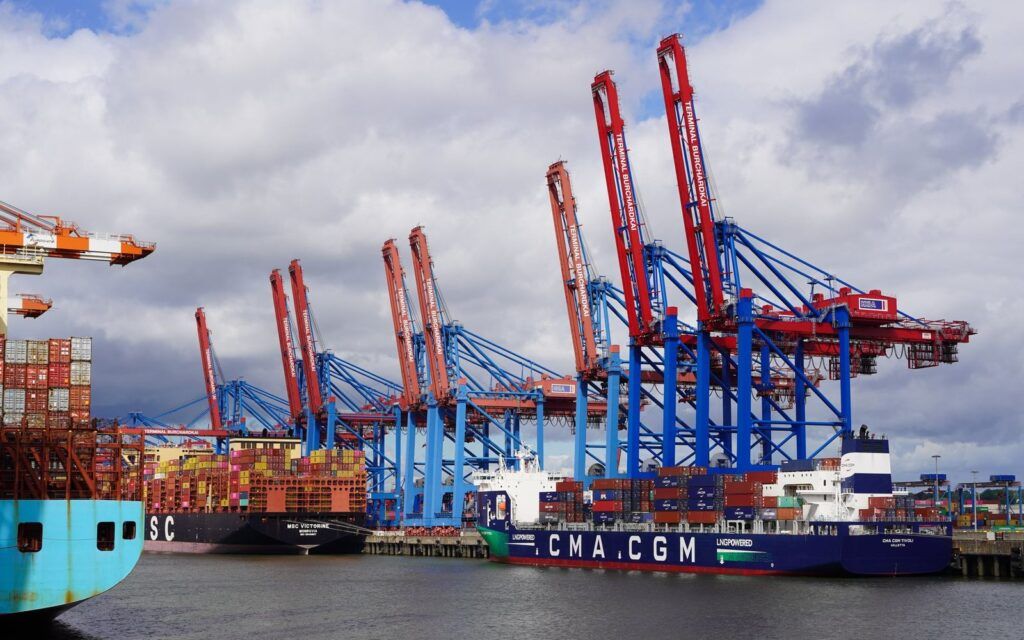
Europe has made it more expensive to send cheap parcels straight from China, and the two biggest Chinese platforms have answered by moving their stock into Europe. In November 2026 Shein announced another €500 million for its logistics hub in Poland, and Temu aims to ship most European sales from local warehouses. Here is what changed, why the platforms are moving, and what it means for smaller Chinese brands selling to EU customers.
Quick answer: Since 1 July 2026 every low-value parcel imported into the EU pays a €3 customs duty per item, and since 1 November 2026 an EU handling fee of €2 per item applies on top, whatever the parcel is worth. Goods already stored in an EU warehouse pay neither, because they were cleared through customs in bulk and leave as domestic parcels. That is why Shein and Temu are shifting stock into European warehouses, and why any Chinese brand with steady EU sales should compare direct parcels with EU stock now.
Jump to: The new EU parcel fees · Shein’s Polish hub · Temu’s local warehouses · The effect so far · What it means for Chinese brands · How to move stock into the EU · FAQ
The new EU parcel fees: €3 duty plus €2 handling fee
For years, goods worth up to €150 entered the EU free of customs duty. Import VAT has been due on every parcel since 2021, but the duty exemption let billions of small parcels, most of them from China, arrive without customs duty. The EU ended that in two steps in 2026.
1 July 2026: €3 customs duty per item
Every distance-sale consignment worth up to €150 pays a flat €3 customs duty for each item, where an item means each different tariff classification in the parcel. It is a temporary measure until the EU’s new customs data hub takes over, planned for 1 July 2028. Read the full guide to the €3 EU customs duty.
1 November 2026: €2 handling fee per item
An EU handling fee of €2 now applies to each item on the customs declaration of a parcel sold to a consumer from outside the EU, regardless of the parcel’s value. It does not apply to business-to-business trade or to gifts between private people. Estonia’s Tax and Customs Board gives the example of an order with three different products: €9 customs duty plus €6 handling fee, before VAT.
Example: a Chinese brand ships 5,000 orders a month to EU customers, with two different products per parcel. The new fees add 5,000 × 2 × (€3 + €2) = €50,000 a month, or €600,000 a year, before shipping and VAT. The same goods imported in pallets or containers pay the normal duty rate for the product once per shipment, and no per-parcel fees.
Shein: €500 million more for its logistics hub in Poland
On 4 November 2026 Shein showed journalists its warehouse at Kąty Wrocławskie, near Wrocław, for the first time and announced a further €500 million for its European logistics hub in Poland this year. According to the City of Wrocław, this brings Shein’s total investment in Poland since 2022 to about €1 billion.
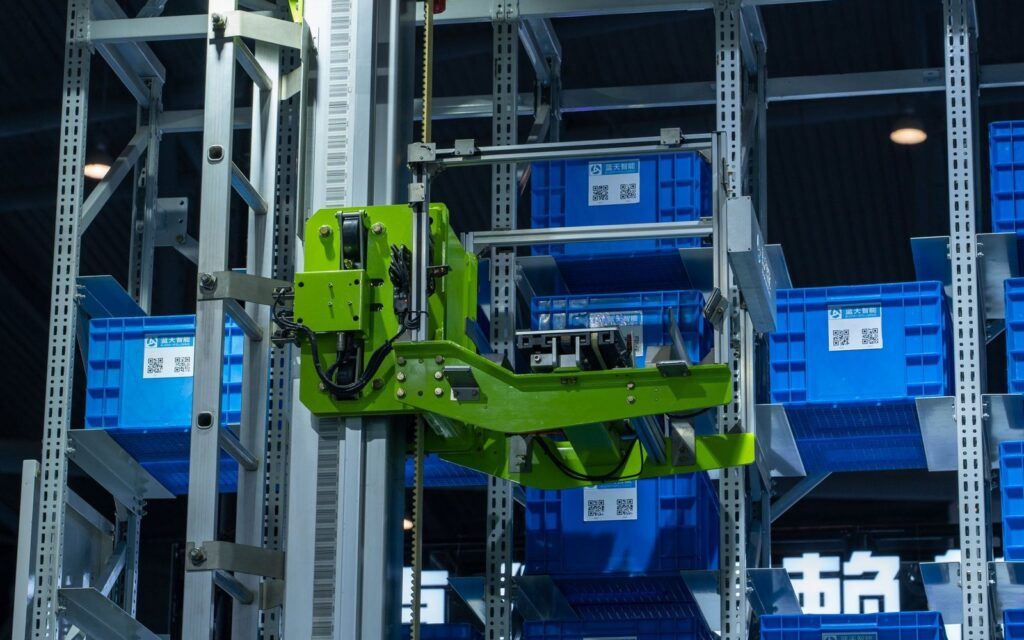
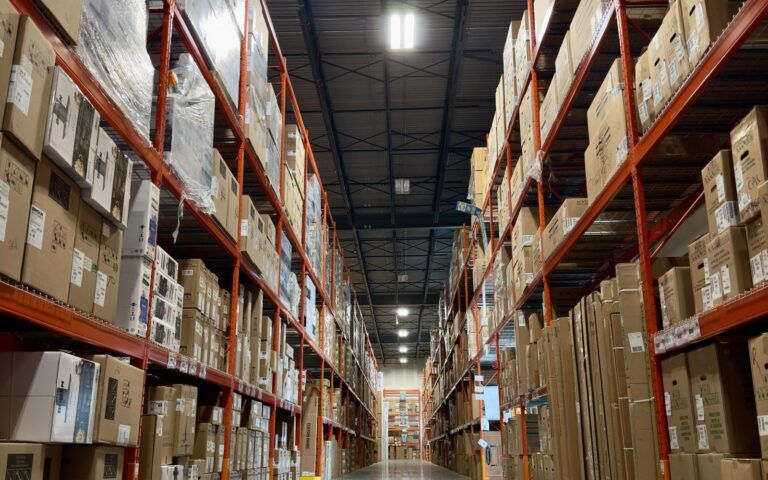
- Size: about 1 million m² of warehouse space across 20 sites in Poland, of which about 250,000 m² at Kąty Wrocławskie.
- Automation: more than 6,500 autonomous robots restock, sort and pick orders.
- People: about 8,000 employees, with plans to reach 10,000 by the end of 2026.
- Speed: parcels can reach many European countries within 48 hours.
The effect is already visible to shoppers. Estonian business daily Ärileht found that most jackets at the top of Shein’s Estonian search results were marked as shipped from an EU warehouse, with no extra duty and delivery in about a week, while items shipped from outside the EU were promised in 6–11 working days.
Temu: most European orders from local warehouses
Temu is following the same route. It runs a “local-to-local” model in which European and Chinese sellers keep stock in warehouses inside Europe. In early 2025 Temu said it would eventually process up to 80% of its European sales through local warehouses, then in Germany, France, Spain, the Netherlands, Italy and Austria. The new fees make that target more urgent: for Temu, as for Shein, local stock removes the per-parcel duty and fees and shortens delivery times.
The effect so far
The €3 duty changed parcel flows quickly. Estonia’s Tax and Customs Board reported that the number of small parcels from Asia fell by about 70% in the first two weeks of July 2026 compared with a year earlier. Shein said its European sales fell by around 14% in the second quarter, which it linked to raising prices before the duty and cutting online advertising.
The fees do not stop Chinese goods from reaching Europe. They change how the goods arrive: in containers and pallets that are cleared once and stored in the EU, instead of millions of single parcels.
Direct parcels vs EU stock after November 2026
Direct parcels from China: €3 duty and €2 handling fee per item, import VAT on every order, about 1–2 weeks’ delivery, returns that rarely make it back. Stock in an EU warehouse: normal duty paid once per shipment, no per-parcel fees, 1–3 day delivery and returns restocked in the EU.
What it means for smaller Chinese brands
Shein and Temu can build their own warehouses. Most Chinese brands, factories and marketplace sellers cannot, but they face the same fees and the same customers who now see “EU warehouse” and fast delivery on the biggest platforms. That raises three questions.
1. Do your numbers still work on direct parcels?
At low order values, €5 or more in fees per item is a large share of the price. Products with several items per order or high return rates are hit hardest.
2. Can you compete on delivery times?
When the market leaders deliver from EU stock in days, a one- to two-week delivery promise loses sales, especially on marketplaces that rank fast-delivery offers higher.
3. Are you ready to import?
Holding stock in the EU means importing in your own name: an EU EORI number, a customs representative, a VAT registration in the warehouse country with OSS for other EU countries, and an EU responsible person under GPSR.
How to move stock into the EU: five steps
- Pick your best sellers. Move the products with steady EU demand into EU stock first and keep slow movers on direct shipping.
- Set up to import. Apply for an EU EORI number, appoint a customs representative and register for VAT in the warehouse country. Check product rules such as GPSR, CE marking and EPR.
- Choose your warehouse country. Poland is lower cost and close to the main China–EU rail route, the Netherlands is next to Rotterdam port, and Germany is the largest market.
- Ship in bulk. Sea freight is cheapest, rail is faster, and air suits urgent restocks. See shipping from China to Europe for transit times.
- Connect your sales channels. Link your shop and marketplaces to the warehouse so EU orders are picked, packed and shipped as domestic parcels.
Related: EU market entry for Chinese brands · The €3 EU customs duty · Selling in the EU from outside the EU · EU VAT: OSS and IOSS · Europe–China freight and logistics · De minimis threshold · Landed cost
Frequently asked questions
Why are Shein and Temu moving stock to EU warehouses?
Because parcels sent directly from outside the EU now pay a €3 customs duty and a €2 handling fee per item. Goods imported in bulk into an EU warehouse pay normal duty once and leave as domestic parcels, which is cheaper and faster.
What is the EU €2 handling fee?
A fee of €2 per item on the customs declaration of parcels sold to consumers from outside the EU, applying from 1 November 2026 regardless of the parcel’s value. It comes on top of the €3 customs duty on parcels worth up to €150 and import VAT.
Do the €3 duty and €2 handling fee apply to goods in an EU warehouse?
No. They apply to low-value parcels imported directly to consumers. Goods imported in bulk pay the normal customs duty for the product when they enter the EU, and orders shipped from the EU warehouse are domestic parcels.
Where is Shein’s European warehouse?
Shein’s main European logistics hub is in Poland, with about 1 million m² of space across 20 sites, including its operations centre at Kąty Wrocławskie near Wrocław.
Can a small Chinese brand use an EU warehouse without its own EU company?
Yes. A Chinese company can import into the EU with an EU EORI number and a customs representative, register for VAT where its stock is held and use a fulfilment provider’s warehouse instead of building its own.
Sources
Figures are taken from the sources below and were checked in November 2026.
- Estonian Tax and Customs Board – EU handling fee on parcels from third countries from 1 November (in Estonian)
- Council of the EU – customs duty on small parcels from 1 July 2026
- City of Wrocław – Shein shows its halls near Wrocław and invests €500 million in Poland this year (in Polish), 4 November 2026
- Ärileht – Shein’s EU warehouse and Estonian orders (in Estonian), November 2026
- Ecommerce News Europe – Temu: 80% of European sales via local warehouses