

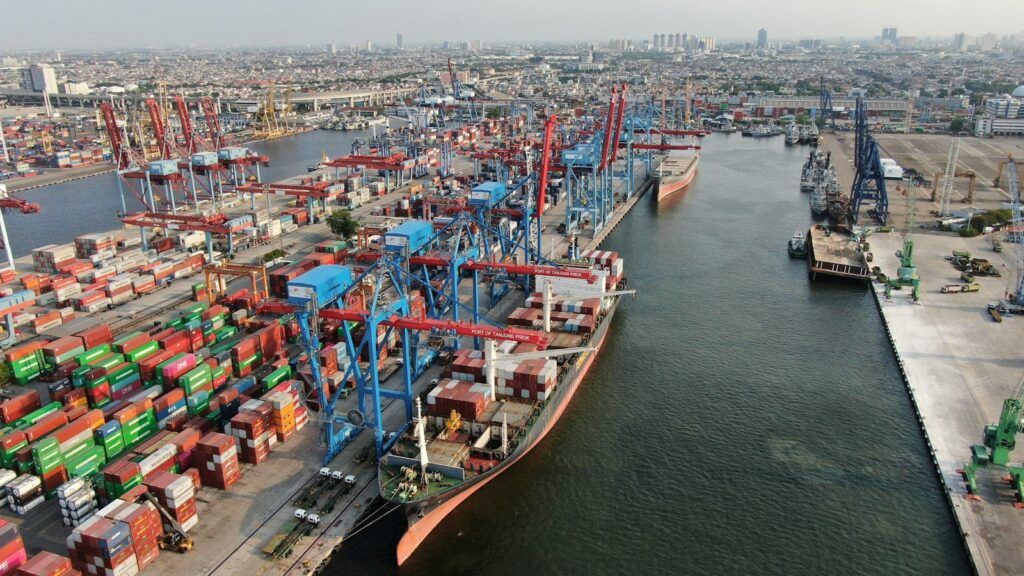
4PL (fourth-party logistics) is a model where one partner manages your whole supply chain for you: it designs the network, selects and coordinates the carriers, warehouses and other providers, and runs it all through one control tower. A 3PL, by contrast, runs logistics operations such as warehousing, fulfilment and shipping. This guide explains what 4PL means, how it differs from 3PL, what 4PL providers do, examples of 4PL companies, and how to decide which model your business actually needs.
Quick answer: A 3PL does the logistics work: storing, picking, packing and shipping your goods. A 4PL manages the logistics: it plans your supply chain and coordinates several 3PLs, carriers and forwarders on your behalf, usually without running the operations itself. Most eCommerce brands need a good 3PL; a 4PL makes sense for companies with complex, multi-country supply chains and many logistics providers to manage.
Jump to: What is 4PL · 1PL to 5PL · 3PL vs 4PL · What a 4PL does · 4PL companies · Pros and cons · Which do you need? · Choosing a provider · FAQ
What is 4PL logistics?
Fourth-party logistics (4PL) means outsourcing the management of your supply chain, not just the physical work. A 4PL provider becomes your single point of contact for logistics. It designs how goods should flow, chooses the logistics companies that move and store them, connects their data in one system, and manages their performance against agreed targets.
The term was coined in 1996 by the consulting firm Andersen Consulting, now Accenture. Its definition described a 4PL as a supply chain integrator that brings together its own resources, capabilities and technology with those of other service providers to deliver a complete supply chain solution. Today you will also see the terms lead logistics provider (LLP) or lead logistics partner, and sometimes managed supply chain operations. In Dutch a 4PL is often called a 4PL logistieke dienstverlener; in German, a 4PL-Dienstleister.
Many 4PLs are non-asset based: they don’t own the warehouses or trucks they manage, so they can pick the best provider for each job. Others are part of large logistics groups and combine their own operations with partners.
1PL, 2PL, 3PL, 4PL and 5PL explained
| Model | Who handles logistics | Typical example |
|---|---|---|
| 1PL | The company itself, with its own staff, vehicles and storage | A brand packing orders in its own storeroom |
| 2PL | An asset-based carrier that moves goods from A to B | A parcel carrier, trucking company or shipping line |
| 3PL | A provider that runs logistics operations for you | An eCommerce fulfilment warehouse that stores, picks, packs and ships |
| 4PL | A provider that manages your logistics and coordinates several 2PLs and 3PLs | A lead logistics provider running a control tower for a manufacturer |
| 5PL | A less established term, usually for providers that combine the demand of many shippers on a technology platform | Digital platforms that buy transport capacity for many companies |
See also our glossary entry for 3PL.
3PL vs 4PL: the key differences
| 3PL | 4PL | |
|---|---|---|
| Main role | Runs logistics operations | Manages and coordinates the whole supply chain |
| Typical services | Receiving, storage, pick and pack, shipping, returns, value-added services | Network design, provider selection, control tower, performance management, continuous improvement |
| Assets | Usually operates warehouses, staff and systems | Often non-asset based; manages other providers’ assets |
| Scope | One or several logistics functions | End to end, across many providers and countries |
| Your contact | The 3PL for its own services | The 4PL, for all logistics providers |
| Pricing | Per activity: per pallet, order, parcel | Management fee, often with gain-sharing on savings |
| Contract | Service agreement, often 1–3 years | Longer strategic partnership |
| Typical customer | eCommerce brands, wholesalers, manufacturers of all sizes | Large companies with complex, multi-country supply chains |
In short: if you need someone to do your logistics, you need a 3PL. If you have several logistics providers already and need someone to run them as one system, you are looking at a 4PL.
What does a 4PL do?
- Supply chain and network design: where to hold stock, which transport modes and routes to use, and how goods flow between suppliers, warehouses and customers.
- Provider selection and contracting: running tenders for carriers, 3PL warehouses, forwarders and customs brokers, and negotiating rates and service levels.
- Control tower and visibility: one platform that collects orders, stock and shipment data from all providers, with alerts when something goes wrong.
- Performance management: KPIs, scorecards and regular reviews for every provider.
- Continuous improvement: cost-to-serve analysis, route and mode optimisation, and scenario planning for new markets or disruptions.
4PL in warehousing, freight and transport
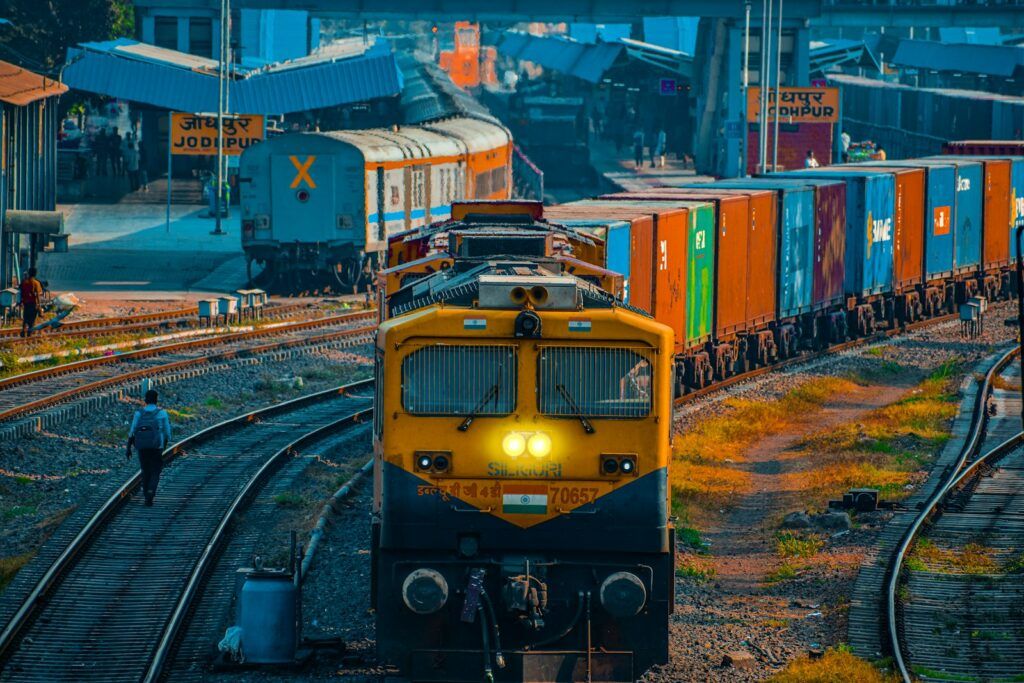
A 4PL rarely runs the warehouse or truck itself. In warehousing it selects and manages 3PL warehouses and decides how stock is distributed between them. In freight and transport it manages forwarders and carriers across sea, air, rail and road, and chooses modes and routes. Many 4PLs offer their control tower as a 4PL platform: software that connects all providers’ data in one place.
Examples of 4PL companies
Many large logistics groups offer 4PL or lead logistics services alongside their 3PL operations. Examples, not a ranking:
- Kuehne+Nagel: 4PL services under the ControLOG name, with real-time supply chain visibility.
- DHL Supply Chain: Lead Logistics Partner solutions with control towers connecting transport, warehousing and inventory.
- DB Schenker: Lead Logistics as an umbrella for 4PL, freight and transport management.
- CEVA Logistics: Lead Logistics Provider services, combining its own operations with specialist partners.
- 4flow: a German 4PL named a leader in Gartner’s Magic Quadrant for 4PL providers.
Some consultancies and software companies also offer 4PL-style services, focusing on planning and control tower technology rather than operations.
Advantages and disadvantages of a 4PL
| Advantages | Disadvantages |
|---|---|
| One point of contact for all logistics | Extra management fee on top of provider costs |
| End-to-end visibility and data in one place | Less direct contact with the warehouses and carriers doing the work |
| Neutral provider selection and stronger negotiating power | Long, complex contracts and a demanding onboarding |
| Supply chain expertise you don’t need to hire | Usually only worthwhile at significant volume and complexity |
| Continuous optimisation of cost and service | Risk of dependency on one partner for the whole supply chain |
3PL or 4PL: which do you need?
| Your situation | Usually the best fit |
|---|---|
| Online brand, one main market, up to a few thousand orders a month | A 3PL for storage and fulfilment |
| Growing brand selling in several European countries | A 3PL network with warehouses in several countries on one platform |
| Company importing from Asia or Africa and selling in Europe | A 3PL that also handles freight forwarding and customs clearance |
| Large manufacturer or retailer with many suppliers, plants, carriers and 3PLs across regions | A 4PL or lead logistics provider |
| Company with an in-house logistics team that wants better data across providers | A control tower or 4PL platform, possibly without full outsourcing |
For most small and mid-size eCommerce brands, a full 4PL is more than they need. What they usually want from a 4PL, one contact and one view of stock across countries, can come from a 3PL that runs several warehouses on one platform.
How to choose a 3PL or 4PL provider
- Map your current set-up: suppliers, warehouses, carriers, countries, order volumes and where problems occur.
- Define what you want to outsource: the physical work (3PL), the management of providers (4PL), or both.
- Check technology: integrations with your shop, marketplaces and ERP, live stock and order data, and reporting.
- Agree KPIs: order accuracy, dispatch times, delivery performance, cost per order and response times.
- Understand pricing: activity rates for a 3PL; management fees, gain-sharing and pass-through costs for a 4PL.
- Ask for references from companies with a similar product, volume and geography.
Read more in our guides to boutique vs enterprise 3PLs, 3PL vs in-house fulfilment costs and contract logistics, or see Waredock’s eCommerce fulfilment and freight forwarding.
Frequently asked questions
What is 4PL in logistics?
4PL, or fourth-party logistics, is a model where one partner manages a company’s whole supply chain: it designs the network, selects and coordinates carriers, warehouses and other providers, and controls them through one platform.
What is the difference between 3PL and 4PL?
A 3PL runs logistics operations such as warehousing, fulfilment and shipping. A 4PL manages and coordinates several logistics providers, including 3PLs, on the company’s behalf, usually without running the operations itself.
What are examples of 4PL companies?
Examples include Kuehne+Nagel (ControLOG), DHL Supply Chain (Lead Logistics Partner), DB Schenker (Lead Logistics), CEVA Logistics (Lead Logistics Provider) and 4flow.
Is a 4PL the same as a lead logistics provider?
The terms are often used for the same idea: a partner that coordinates other logistics providers for a company. Some providers use “lead logistics provider” for a slightly narrower, more operational role.
When should a company use a 4PL?
When its supply chain spans many suppliers, countries and logistics providers, and managing them in-house costs too much time or expertise. Smaller eCommerce brands usually get more value from a good 3PL.
What is 5PL?
5PL is a less established term, usually used for providers that combine the logistics demand of many companies on a technology platform to buy capacity at scale.
Sources
- Logistics Manager, The fourth way (origin of the 4PL term)
- Inbound Logistics, 4PLs take control
- Supply Chain Digital, Top 10 fourth party logistics (4PL) providers globally
- CEVA Logistics, Lead Logistics services
- Eurotransport, 4flow als 4PL-Leader im Gartner Magic Quadrant
- Gartner, 4PL market reviews