

What is eCommerce fulfilment?
eCommerce fulfilment is everything that happens between a customer placing an online order and receiving it: receiving and storing stock, picking and packing the order, shipping it with a carrier and handling returns. It is also called order fulfilment, e-fulfilment or, in American English, eCommerce fulfillment.
Online brands either run fulfilment themselves, in-house, or outsource it to a fulfilment company, also called a 3PL or fulfilment provider, which does the work in its warehouses for a fee per order and per pallet.
Core principle: Fulfilment turns an online order into a delivered parcel. The faster and more accurately it runs, the better your reviews, repeat orders and margins.
The eCommerce fulfilment process
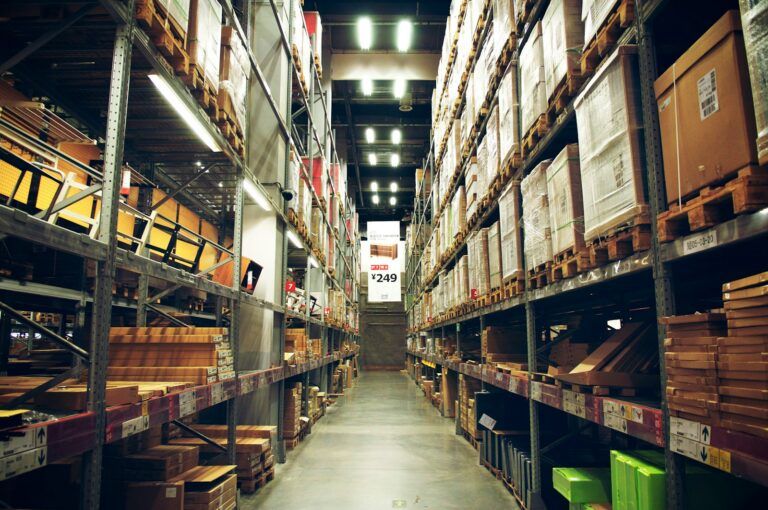
1. Receiving
Stock arrives from suppliers on pallets or in cartons, is counted, checked and booked into the warehouse system.
2. Storage
Products are stored on shelves or in pallet racking, with real-time stock levels synced to your shop and marketplaces.
3. Order processing
Orders flow in automatically from the webshop and marketplaces and are released to the warehouse.
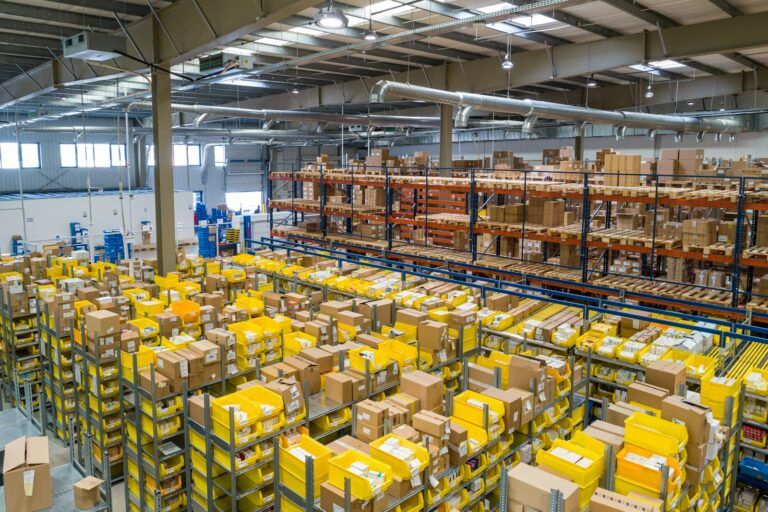
4. Pick and pack
Staff pick the items, pack them in the right box with any inserts or gift wrapping, and print the shipping label. See pick and pack.
5. Shipping
The parcel is handed to a carrier, and the customer gets a tracking link. See track and trace.
6. Returns
Returned items are checked, graded and put back in stock, refurbished or recycled.
In-house vs outsourced fulfilment
| In-house | Outsourced (fulfilment company) | |
|---|---|---|
| Costs | Fixed: rent, staff, equipment, software | Variable: per order, per pallet, per item |
| Control | Full control over every step | Agreed service levels and live reporting |
| Scaling | New space and staff needed as you grow | Capacity grows with your orders |
| Countries | Usually one location | Several countries through one provider |
For a cost comparison, see 3PL vs in-house fulfilment costs in Europe and fulfilment costs.
Spelling: “fulfilment” and “fulfillment” mean the same; see fulfilment or fulfillment.
Example: A supplements brand ships 1,500 orders a month from its own small warehouse in Estonia. To reach Germany and the Nordics faster, it moves its stock to a fulfilment company with warehouses in Germany and Sweden. Orders from Shopify and Amazon are now picked and shipped the same day from the warehouse closest to each customer, and the brand pays per order instead of rent and staff.
Looking for a provider? See eCommerce fulfilment services in Europe from Waredock.
Frequently asked questions
What is eCommerce fulfilment?
The process of storing stock, picking, packing and shipping online orders, and handling returns, either in-house or through a fulfilment company.
What is the difference between fulfilment and shipping?
Shipping is one step: moving the parcel to the customer. Fulfilment covers the whole process, from receiving stock to delivery and returns.
What is e-fulfilment?
Another word for eCommerce fulfilment: fulfilling orders placed online.
When should a brand outsource fulfilment?
Usually when packing orders takes too much of the team’s time, when you start selling in several countries, or when volumes grow beyond a few hundred orders a month.