


On-demand warehousing lets you rent warehouse space and services when you need them, for as long as you need them, without signing a multi-year lease. You pay for the pallets you store and the work done on them, and scale up or down month by month. This guide explains how it works, how it differs from traditional warehousing, its benefits and downsides, what it costs and when it makes sense.
Quick answer: On-demand warehousing is flexible, pay-per-use warehousing through a network of warehouses, booked and managed on one online platform. It suits seasonal peaks, overflow stock, testing a new market and growing brands with changing volumes. The trade-offs: less say over the exact building, prices per pallet that can be higher than a long-term contract, and the need for good stock data across locations.
What is on-demand warehousing?
On-demand warehousing is a model where businesses use spare capacity in existing warehouses on flexible terms: no long lease, no minimum term of several years and no need to build or run your own site. A provider connects many warehouses into one network and sells their space and services through one platform, with one contract, one price list and one system for stock and orders.
It is often described as “Airbnb for warehouses”. That’s also how Waredock started in Estonia in 2019: by matching brands that needed space with warehouses that had it. Today the model goes further than renting space. Providers also handle receiving, storage, picking, packing, shipping and returns, so on-demand warehousing and outsourced fulfilment increasingly overlap.
Core principle: You buy warehouse capacity like a service, not like property. You pay for what you use, when you use it.
How on-demand warehousing works
1. Tell the provider what you need
Products, number of pallets or shelf locations, countries, start date, expected inbound and outbound volumes, and any special needs such as food, dangerous goods or temperature control.
2. Get matched to a warehouse
The provider proposes a warehouse in its network that fits your goods, location and volumes, with one price list for storage and handling.
3. Connect and send stock
You connect your shop, marketplace or ERP, announce your inbound shipment and send the stock. The warehouse receives, counts and stores it.
4. Pay per use
You pay per pallet or shelf location, per inbound and outbound movement and per order, usually invoiced monthly.
5. Scale up, down or move
Add pallets for peak season, reduce them afterwards, or add a warehouse in another country, without renegotiating a lease.
On-demand vs traditional warehousing
| Traditional warehousing | On-demand warehousing | |
|---|---|---|
| Contract | Lease or 3PL contract, often 3–10 years | Monthly or project-based, short notice periods |
| Commitment | Fixed space, paid whether it is full or empty | Pay for the space and services you use |
| Locations | One or a few sites | A network of warehouses in several regions or countries |
| Set-up time | Months: search, negotiation, fit-out | Days to weeks |
| Technology | Often the warehouse’s own legacy system | One online platform for stock, orders and billing |
| Price per pallet | Lower at high, stable volumes | Can be higher, but no cost for empty space |
| Best for | Large, stable volumes in one place | Changing volumes, peaks, new markets, growing brands |
Benefits of on-demand warehousing
- No long-term commitment: no lease, no capital tied up in racking, forklifts or staff.
- Pay for what you use: storage costs follow your stock levels instead of your peak.
- Fast to start: space can be ready in days, which matters when a container arrives early or a big order comes in.
- Closer to customers: store stock in the countries where you sell, for faster and cheaper delivery. See multi-warehousing.
- Test before you commit: try a new market with a few pallets before opening anything permanent.
- One view of stock: all locations in one platform, instead of a spreadsheet per warehouse.
Downsides of on-demand warehousing
- Higher unit prices at scale: for large, stable volumes in one place, a long-term contract or your own warehouse can be cheaper per pallet.
- Less choice of building: you choose a region and service level; the provider chooses the exact site.
- Capacity is not unlimited: in peak season or tight markets, flexible space can run short, so book early.
- Data across locations: stock split over several warehouses needs good systems, or you lose track of what is where.
- Tax and compliance: storing stock in another EU country usually means registering for VAT there, and some goods need licensed warehouses, for example food or dangerous goods.
When does on-demand warehousing make sense?
| Situation | How on-demand warehousing helps |
|---|---|
| Seasonal peaks (Q4, summer, launches) | Extra pallets for a few months, then scale back |
| Overflow stock | Move slow-moving or excess stock out of your main warehouse |
| Early or delayed containers | Short-term space while your main site catches up |
| Testing a new country | Local stock for faster delivery, without a lease |
| Growing brands | Space and services that grow with your orders |
| B2B and pallet business | Pallet storage close to retail and wholesale customers |
Which industries use on-demand warehousing?
eCommerce and D2C brands use it most, for fulfilment and peak capacity. Consumer goods and food brands use it for pallet stock near retailers, manufacturers for raw materials and spare parts, and importers for stock that arrives in large shipments. Fashion, health and beauty brands use it for seasonal ranges and product launches.
What does on-demand warehousing cost?
Prices depend on the country, the goods and the services, but the cost elements are similar everywhere:
- Storage: per pallet, shelf location or cubic metre, per week or month
- Inbound handling: per pallet, carton or container unloaded and received
- Outbound handling: per pallet shipped, or per order and item for fulfilment
- Extras: labelling, kitting, returns, packaging materials and shipping
Compare the total for your real volumes, not just the storage price. For typical cost elements and examples, see fulfilment costs and 3PL vs in-house fulfilment costs in Europe.
How to choose an on-demand warehousing provider
- Locations: warehouses in the countries and regions where your customers and suppliers are.
- Goods: experience with your products, plus any licences you need (food, organic, temperature control, dangerous goods).
- Services: storage only, or also fulfilment, B2B orders, returns and value-added services.
- Technology: integrations with your shop, marketplaces and ERP, and live stock data across all sites.
- Terms: notice periods, minimum volumes and how quickly you can scale up or down.
- Pricing: a clear price list for your real volumes, with no hidden fees.
On-demand warehousing in Europe
In Europe, on-demand warehousing is especially useful for brands that sell across borders. A network of warehouses lets you hold stock in Germany for the German market, in the Netherlands for the Benelux, in Poland for Central Europe and in the Nordics and Baltics for the north, all through one provider. Since the EU introduced a customs duty on low-value parcels from outside the EU in 2026, more brands from the UK, US and Asia also hold stock inside the EU instead of shipping every order from abroad.
Example: A UK cosmetics brand sells across the EU from its warehouse in England. Before Christmas, it books 60 pallets in a warehouse in Germany for eight weeks, ships its bestsellers there in one truck, and fulfils EU orders locally with next-day delivery. In January, it reduces to 15 pallets and keeps the German stock for its fastest-selling products only.
On-demand warehousing trends
- From space to service: providers combine flexible space with fulfilment, B2B and returns, so brands deal with one partner.
- Stock closer to customers: faster delivery expectations push brands to split stock across countries. See same-day delivery.
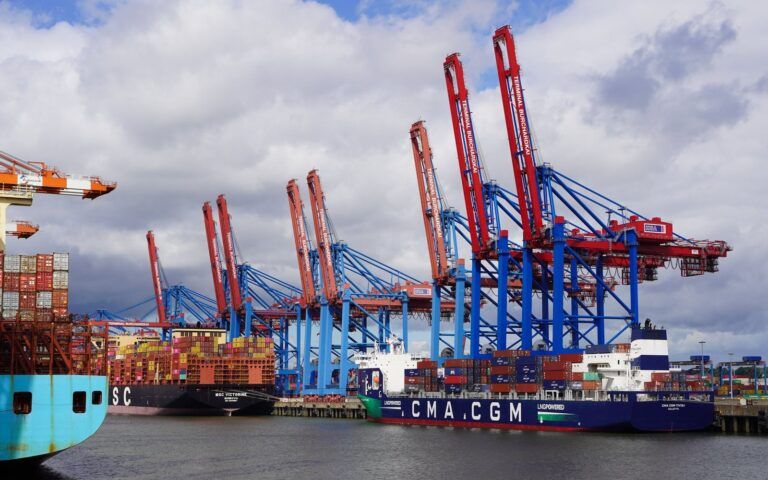
- Supply chain shocks: port delays, tariffs and changing customs rules make flexible capacity a buffer rather than a luxury.
- AI and automation: platforms use data to forecast stock needs, choose the best warehouse for each product and flag problems early.
On-demand warehousing with Waredock
Waredock gives you warehouse space and fulfilment across a network of warehouses serving seven European countries, on one platform. Our team and AI agents work together to match your stock to the right location, keep it in sync with your shop and marketplaces, and ship orders the same day. See short-term and flexible warehouse storage, pallet storage in the Netherlands and Germany and eCommerce fulfilment in Europe.
Frequently asked questions
What is on-demand warehousing?
Flexible, pay-per-use warehousing: you rent space and services in a network of warehouses when you need them, without a long-term lease.
How does on-demand warehousing work?
You tell the provider what you need, get matched to a warehouse in its network, send your stock and pay per pallet, movement and order, scaling up or down as your volumes change.
What are the downsides of on-demand warehousing?
Higher unit prices than long-term contracts at large, stable volumes, less choice of the exact building, limited capacity in peak season and the need for good stock data across locations.
Is on-demand warehousing the same as a 3PL?
They overlap. A traditional 3PL usually runs its own sites on long contracts; on-demand warehousing offers flexible terms across a network. Many on-demand providers also offer 3PL services such as fulfilment.
What is a warehouse marketplace?
An online platform that connects businesses needing space with warehouses that have spare capacity. Some only match the two; others manage the whole service under one contract.
Is “Demandware fulfillment” the same as on-demand warehousing?
No. Demandware is the former name of Salesforce Commerce Cloud, an eCommerce platform. Shops on any platform can use on-demand warehousing, as long as the provider can connect to their shop or order system.