


A fulfilment centre is where online orders are turned into parcels. This guide explains what fulfilment centres do, step by step, how they differ from warehouses, distribution centres and 3PLs, which types exist, and how to choose a fulfilment company in Europe.
Quick answer: A fulfilment centre is a warehouse that stores products for brands and ships them as individual orders: it receives stock, stores it, picks and packs each order, ships it and handles returns. A distribution centre mostly ships cartons and pallets to stores and other businesses. A fulfilment company, usually a 3PL, runs one or more fulfilment centres for many brands.
Jump to: What it is · What fulfilment centres do · vs warehouse and distribution centre · vs fulfilment company and 3PL · Types · When to outsource · How to choose · FAQ
What is a fulfilment centre?
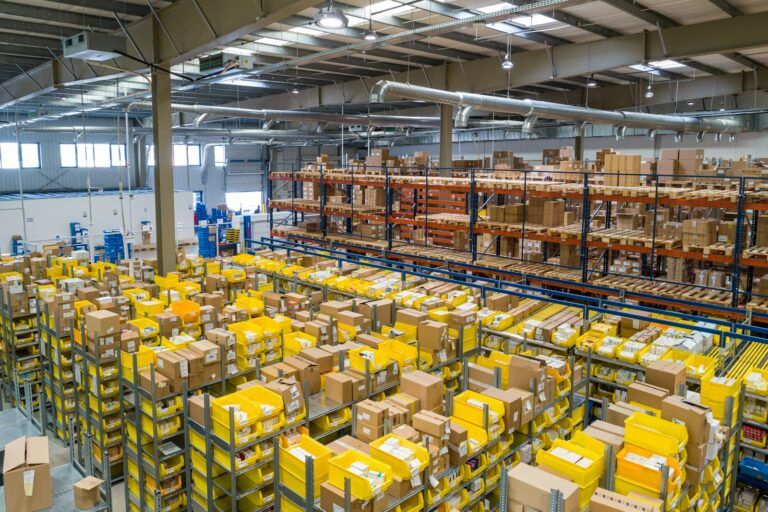
A fulfilment centre (spelled fulfillment center in American English) is a warehouse designed to send out orders quickly, mostly to consumers who bought online. Stock arrives from brands or their suppliers in cartons and pallets and leaves as single parcels, often within hours of the order.
Unlike a classic storage warehouse, a fulfilment centre is organised around speed and accuracy: products sit in small pick locations near packing stations, every movement is scanned in a warehouse management system, and orders from the brand’s webshop and marketplaces arrive automatically.
What do fulfilment centres do?
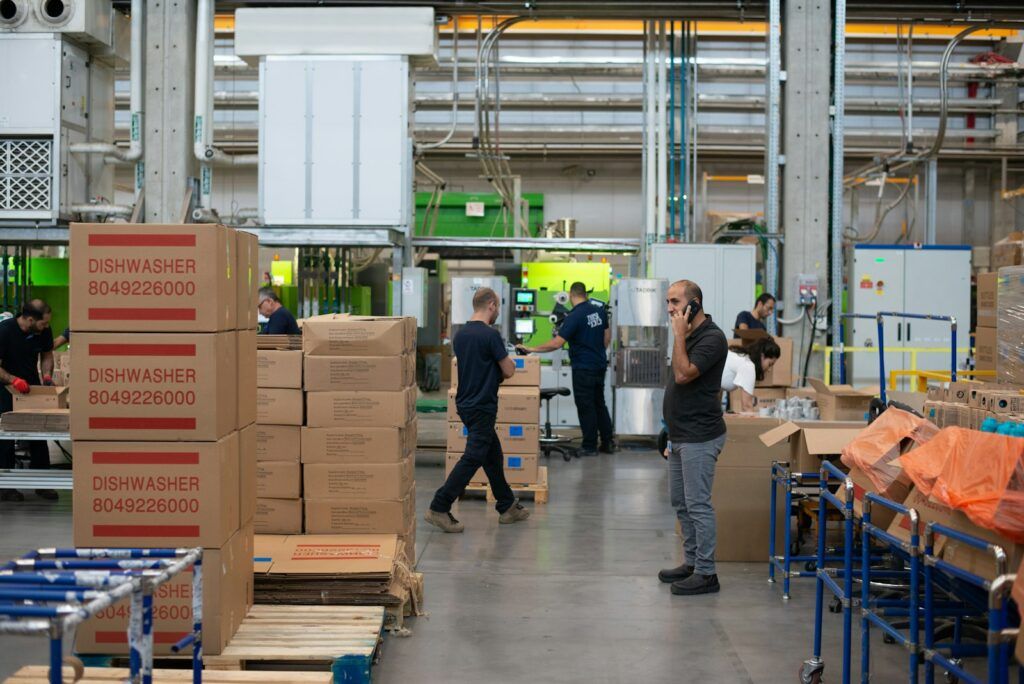
The work follows the same steps in almost every fulfilment centre. Together they form the eCommerce fulfilment process, the core of eCommerce logistics.
1. Receiving
Incoming deliveries are counted, checked for damage and matched against what the brand said it would send. Each product gets a barcode if it doesn’t have one.
2. Storage
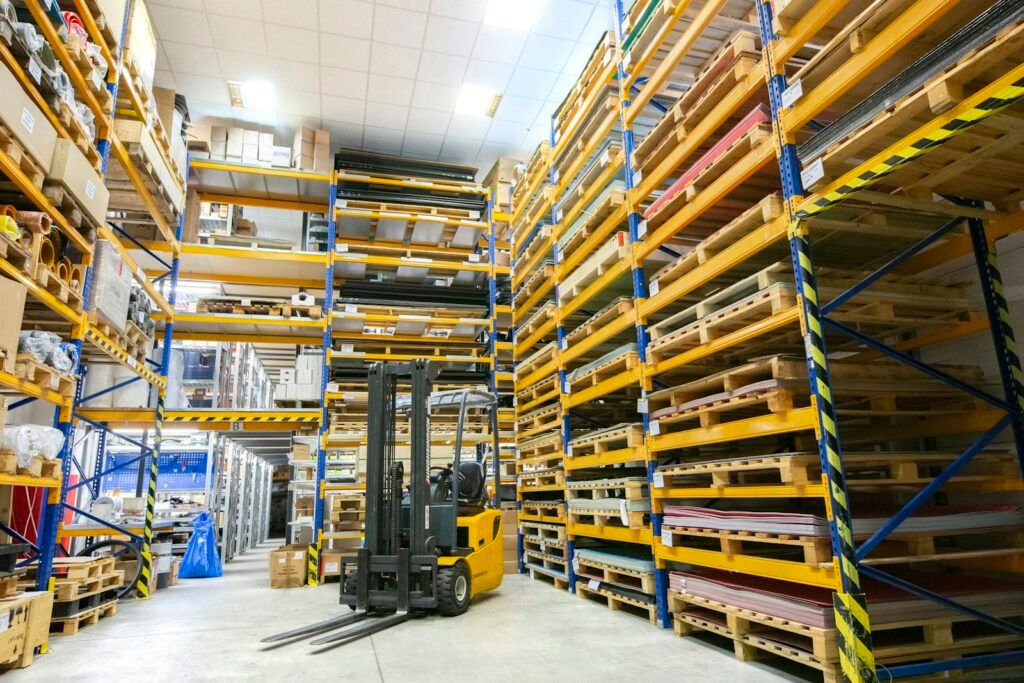
Stock is put away in tracked locations: shelves and bins for small items, pallet racking for reserve stock and bulky goods. The brand sees live stock levels per product.
3. Order processing
Orders from the webshop and marketplaces reach the warehouse system automatically and are grouped into pick lists by carrier, cut-off time and priority.
4. Pick and pack
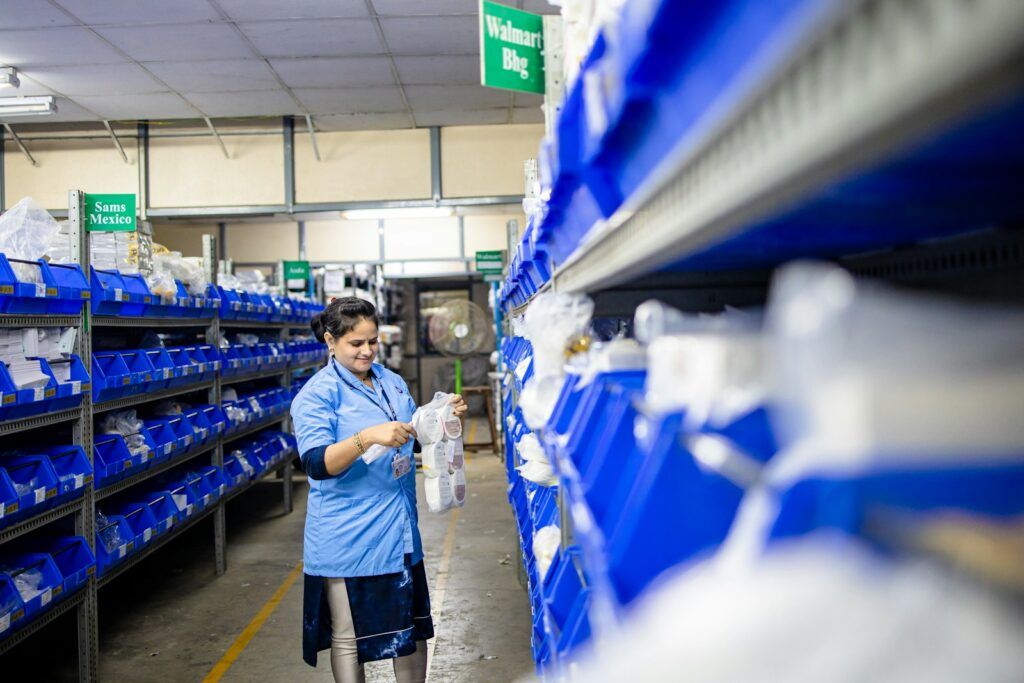
Pickers collect the items, each one is scanned against the order, and packers choose the box, add inserts and print the label. See pick and pack services.
5. Shipping
Parcels are handed to the carrier, and tracking numbers are sent back to the shop or marketplace so customers are notified.
6. Returns
Returned items are checked, graded and put back into stock or set aside. See returns management.
Many fulfilment centres also offer kitting and value-added services (bundles, gift sets, labelling), FBA prep for Amazon, and carton or pallet orders for retailers.
Fulfilment centre vs warehouse vs distribution centre
The three terms overlap, and many sites today combine them. The differences are in who the customers are and how goods leave the building.
| Warehouse | Distribution centre | Fulfilment centre | |
|---|---|---|---|
| Main job | Store goods safely | Move goods on to stores and businesses | Ship individual orders to consumers |
| Typical customers | Manufacturers, wholesalers, retailers | Retail stores, wholesalers, other warehouses | Online shoppers (B2C), often B2B too |
| Goods leave as | Pallets and cartons | Cartons and pallets, mixed per store | Single parcels |
| How long stock stays | Weeks to months | Days to weeks | Days to weeks, fast movers less |
| Who runs it | Owner or a logistics provider | Retailer or a logistics provider | Brand, marketplace or a fulfilment company |
Warehouse
A building for storing goods until they are needed. A private warehouse supports one company’s supply chain; a public or shared warehouse rents space to many. Warehouses may be temperature-controlled or automated, and on-demand warehousing offers short-term space without long contracts. See warehouse storage.
Distribution centre
A bridge between suppliers and stores. Goods arrive in bulk, are broken down and sent on in mixed cartons or pallets to each store, usually on a fixed schedule. Distribution centres can be conventional (people and forklifts), mechanised (conveyors and sorters) or automated (robots and automated storage). Retail distribution centres also supply fulfilment centres for online orders.
Fulfilment centre
Built for many small orders. Products are stored for fast picking, and orders ship the same day they come in before the cut-off. Many fulfilment centres also pack B2B orders for retailers from the same stock, which is the basis of omnichannel fulfilment.
Fulfilment centre vs fulfilment company vs 3PL
A fulfilment centre is the building. A fulfilment company is the business that runs fulfilment for other brands, from one or several fulfilment centres, and sells it as a service. Most fulfilment companies are 3PLs (third-party logistics providers); “3PL” is the broader term and also covers transport and B2B logistics. A 4PL manages several logistics providers on a brand’s behalf without running warehouses itself.
When people search for warehousing and fulfilment companies or an order fulfilment company, they usually mean a 3PL that stores stock and ships orders for them. Our directory of 500+ European 3PL and warehouse companies lists them by country.
Types of fulfilment centres
Shared 3PL fulfilment centres
Run by a fulfilment company for many brands at once, so space, staff and carrier rates are shared. The most common choice for growing eCommerce brands.
Marketplace fulfilment centres
Run by a marketplace for its sellers, such as Amazon with FBA. Amazon describes several building types in its network, from sortable fulfilment centres for smaller items and non-sortable ones for bulky goods to receive centres, sortation centres and delivery stations. See FBA vs FBM in Europe and how Amazon’s robotic fulfilment centres work.
Micro-fulfilment centres
Small sites inside cities, often for groceries and quick commerce, that keep a limited range close to customers. See micro-fulfilment centres.
In-house fulfilment centres
Run by the brand itself. Full control, but the brand carries the lease, staff, systems and peaks. See 3PL vs in-house fulfilment costs.
When to use a fulfilment company
- Packing orders takes more of your team’s time than selling and product work.
- You run out of space, or peaks such as Black Friday overwhelm your own setup.
- You want faster delivery in other countries without opening your own warehouse there.
- You add marketplaces or retailers and need one stock for every channel.
- Your shipping rates are higher than a fulfilment company can get through its volume.
Compare the full cost first: fulfilment costs in Europe explains the usual fee types and how to read a quote.
How to choose a fulfilment company
Location
Warehouses close to your customers mean shorter delivery times and lower shipping costs. Check which countries the company actually stores stock in.
Channels and integrations
Your webshop, marketplaces and B2B orders should connect without manual work, with stock levels synced back.
Accuracy and speed
Ask for order accuracy, cut-off times and same-day dispatch rates. See what order accuracy to expect from a 3PL.
Returns and extras
Check how returns are graded and restocked, and whether kitting, inserts and B2B orders are possible.
Pricing and contract
Ask for every fee for your volumes, minimums, and how long you are tied in.
For a longer checklist and ten providers compared, see the best eCommerce fulfilment companies in Europe.
How Waredock helps: Waredock runs fulfilment from warehouses in Germany, the Netherlands, Poland, Spain and Estonia, serving seven European countries. Our team and AI agents work together to receive, store, pick, pack and ship webshop, marketplace and B2B orders from one stock, with same-day dispatch before cut-off. See eCommerce fulfilment in Europe or request a proposal.
Frequently asked questions
What is a fulfilment centre?
A fulfilment centre is a warehouse built to ship orders, mostly to online shoppers. It receives stock from brands, stores it, picks and packs each order, hands parcels to carriers and processes returns. In American English it is spelled fulfillment center.
What do fulfilment centres do?
They receive and check incoming stock, store it in tracked locations, pick and pack orders as they arrive, ship them with the right carrier, process returns and report stock levels to the brand. Many also do kitting, labelling and B2B orders for retailers.
Is a fulfilment centre the same as a warehouse?
Every fulfilment centre is a warehouse, but not every warehouse is a fulfilment centre. A classic warehouse stores goods, often on pallets, for long periods. A fulfilment centre is set up to move goods out quickly as individual orders.
What is the difference between a distribution centre and a fulfilment centre?
A distribution centre mainly ships larger quantities to businesses, such as cartons and pallets to stores. A fulfilment centre mainly ships individual orders to consumers. Many modern sites do both from the same stock.
What is a fulfilment company?
A fulfilment company is the business that runs fulfilment for other brands, from one or several fulfilment centres. It is a type of 3PL (third-party logistics provider) that focuses on storage, order fulfilment and returns.
How much does a fulfilment centre cost?
Fulfilment companies usually charge for receiving, storage, pick and pack per order, packaging, shipping and returns. Totals depend on order volume, product size and destinations; see our guide to fulfilment costs in Europe for typical fee types and how to compare quotes.
Sources
- Amazon – Our fulfillment centers (building types in Amazon’s network), checked November 2026